
Onsite Crankpin Machining.

Specialist Crankpin Machining Services.
Crankpins are among the most heavily loaded surfaces within large diesel engines and reciprocating machinery. Operating under high forces and relying on a stable lubrication film, these journal surfaces are critical to the reliable operation of the crankshaft assembly.
When lubrication breaks down or a bearing fails, rapid heat generation can occur at the crankpin interface. This can lead to surface scoring, localised heat damage, cracking or distortion of the journal geometry. If not corrected accurately, these conditions can quickly result in further bearing damage and machinery downtime.
Journal Machining provides specialist in-situ crankpin machining, allowing damaged crankpins to be restored directly to OEM dimensional tolerances and surface finish requirements within the installed engine or machine.
Crankpin Damage and Failure .
Crankpin damage most commonly occurs following bearing failure or lubrication breakdown. When the oil film between the bearing shell and crankpin surface is lost, metal-to-metal contact can rapidly generate heat and damage the journal surface.
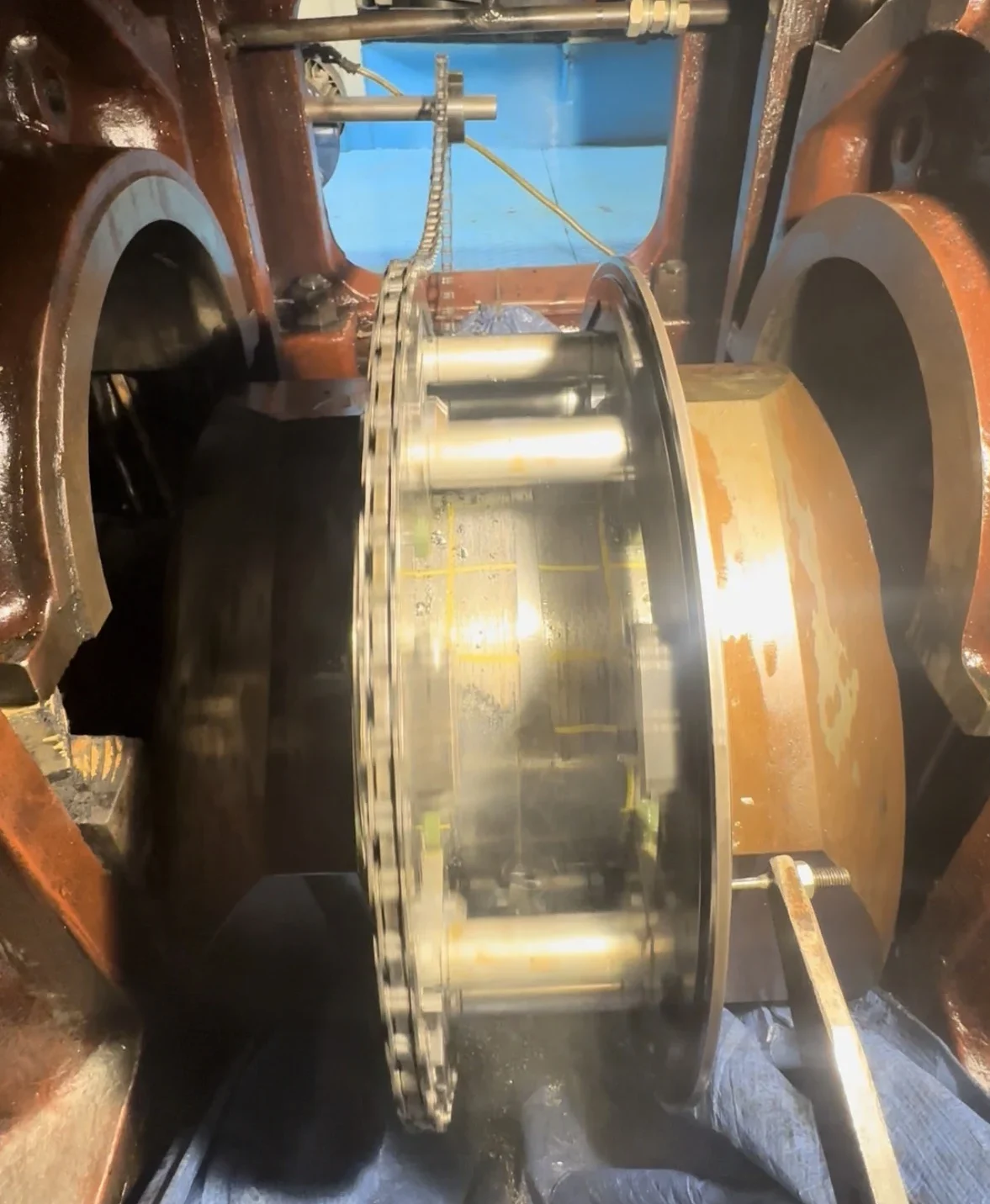
In-Situ Crankpin Repair.
Where appropriate, crankpins can be restored through controlled in-situ machining carried out directly within the installed engine or machine. Removing damaged material from the crankpin surface allows the journal geometry to be restored so that correct operating tolerances can be re-established.
Working directly on the installed crankshaft allows the original alignment of the rotating assembly to be maintained while avoiding the risks associated with removing large crankshafts from the machinery.
Typical Applications.
Both planned maintenance work and time-critical breakdown repairs may involve crankpin machining, depending on the condition of the journal surface.
Inspection and Verification.
Assessment
Every crankpin repair is assessed individually. Measurements of wear, ovality, taper and surface condition are used to determine the appropriate repair approach before machining begins.
Verification
Careful setup, measurement and verification during the machining process ensure the crankpin geometry is restored accurately so that correct bearing contact and lubrication conditions are re-established.
Frequently Asked Questions.
If you have any other question please contact us.
When is in-situ crankpin machining the right repair option?
In-situ crankpin machining is suitable where a damaged crankpin needs to be restored directly within the installed engine or machine, without the risks and disruption associated with removing a large crankshaft. Where site conditions allow, this approach helps maintain the original alignment of the rotating assembly while restoring the journal surface to the required condition.
What kind of damage can require crankpin machining?
Crankpin machining may be required following bearing failure or lubrication breakdown. Typical damage can include scoring, surface distress, ovality, taper, heat damage, cracking and distortion affecting bearing alignment.
Why are crankpins so critical to engine performance?
Crankpins are among the most heavily loaded surfaces within large diesel engines and reciprocating machinery. They operate under high forces and rely on a stable lubrication film, making their condition essential to the reliable operation of the crankshaft assembly.
What equipment can require crankpin machining?
Crankpin machining may be required on marine propulsion and auxiliary engines, diesel generator engines, compressors, reciprocating machinery, and large industrial engines used in heavy plant equipment.
How is a crankpin assessed before repair?
Every crankpin repair is assessed individually. Measurements of wear, ovality, taper and surface condition are used to determine the appropriate repair approach, while careful setup, measurement and verification during machining help ensure the restored crankpin geometry supports correct bearing contact and lubrication conditions.
Need Support with Crankpin Machining?
Speak to us about planned works or urgent on-site repair requirements.